
The Audit Spectrum: Website Audit vs. SEO Audit vs. Performance Audit, What’s the Difference?
By Auditbly
•November 28, 2025
•10 min read
You've just been handed a mandate: "We need a full website audit."
Great. That sentence is loaded. If you've spent any time in web development, you know that "audit" can mean anything from a quick glance at the Lighthouse score to a deep, multi-week dive into the bowels of your infrastructure. The truth is, not all audits are created equal, and treating them as interchangeable can lead to chasing the wrong fixes entirely.
Often, the tension isn't about whether to audit, but what kind of audit is actually needed. Do you need a holistic, top-to-bottom checkup, or a focused surgical strike on a specific problem? Understanding the difference between a general Website Audit, an SEO Audit, and a Performance Audit isn't just semantics; it's the difference between delivering business value and spinning your wheels.
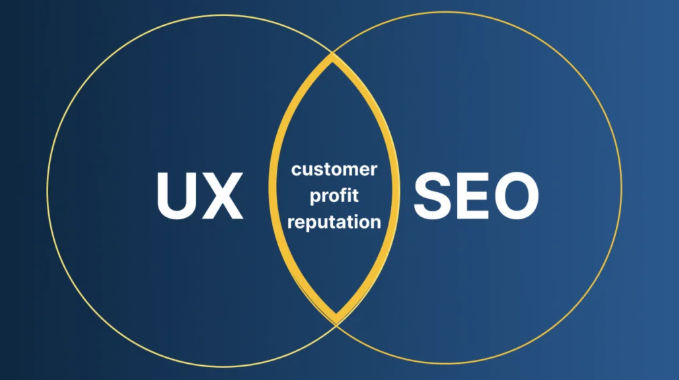
Figure: When all boxes are checked users are happy.
Let's unpack the three main pillars of a healthy web presence and clarify where each type of audit draws its boundaries.
The Holistic View: The Website Audit
Think of a Website Audit as the comprehensive annual physical for your entire digital property. It's the broadest category, encompassing all the major health markers required for a modern, successful site.
The goal here is a full-spectrum diagnosis. It’s the audit you run when you suspect multiple problems across different domains, or when you’re taking over a new project and need a complete baseline.
A proper Website Audit will inherently contain the core elements of the other two audit types, but it also reaches into broader topics:
- Accessibility (The Non-Negotiable Core): Are all users, regardless of ability or assistive technology, able to perceive, operate, and understand your content? This includes contrast ratios, keyboard navigation, ARIA attributes, semantic HTML, and alt-text consistency.
- User Experience (UX): Is the navigation intuitive? Are forms usable? Does the site flow logically for the user?
- Security: Are HTTPS certificates correctly implemented? Are there glaring XSS vulnerabilities?
The primary benefit of a Website Audit: It ensures the foundational integrity of the site. It’s the process that keeps you out of legal hot water (accessibility) and stops major platform vulnerabilities (security), creating a stable base for everything else.
The Organic Magnet: The SEO Audit
An SEO Audit has a laser focus: maximizing the organic visibility of your content in search engines. Everything in this audit is tethered to one core objective: convincing search engine crawlers that your page is the most relevant, authoritative, and structured answer to a user's query.
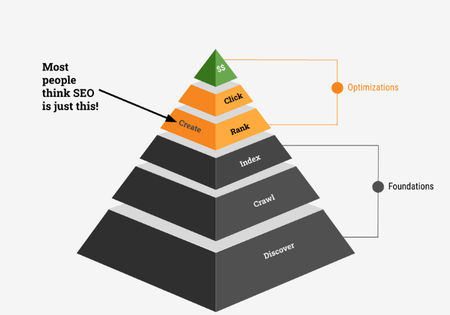
Figure: Not all components of SEO are directly visible, focus on organic search optimization.
While a slow site can hurt SEO (making performance relevant), and inaccessible content can indirectly hurt indexing (making accessibility relevant), an SEO Audit primarily concerns itself with factors that directly influence ranking and indexing.
Key areas of investigation include:
- Technical SEO: Checking the sitemap, robots.txt directives, canonical tags, mobile-friendliness, and crawlability issues. If a crawler can't find or interpret your content correctly, you don't exist.
- On-Page SEO: Evaluating the structure and quality of the content itself; correct use of to headings, meta descriptions, title tags, internal linking structure, and keyword optimization (subtly, of course, because keyword stuffing is for amateurs).
- Off-Page SEO: A quick health check of your backlink profile to ensure you aren't being penalized by toxic links.
- Structured Data: Ensuring schemas (like
Product,Recipe, orFAQPage) are correctly implemented so you can capture those valuable rich snippets.
The primary benefit of an SEO Audit: It’s a traffic-generation exercise. The audit delivers a clear path to increasing organic search rankings and capturing free, qualified traffic. Without a dedicated SEO Audit, your expertly crafted content might as well be buried in a digital desert.
The User Experience Accelerator: The Performance Audit
The Performance Audit is all about speed, efficiency, and resource optimization. It asks one crucial question: How quickly does this page become useful to the end-user?
Developers know that performance isn't just about a low initial load time; it's about the entire perceived speed and responsiveness of the site. This audit delves deep into the mechanisms of the browser and the server.
You'll be focused on metrics like the Core Web Vitals:
- Largest Contentful Paint (LCP): How fast the main content loads.
- First Input Delay (FID) / Interaction to Next Paint (INP): How quickly the page responds to user interaction.
- Cumulative Layout Shift (CLS): How much visual instability the user experiences.
The actions derived from a Performance Audit are highly technical: image compression and next-gen formats, smart caching strategies, minification of CSS/JS, server-side rendering (SSR) vs. client-side rendering (CSR), and efficient resource loading (e.g., lazy loading).
The primary benefit of a Performance Audit: It directly impacts user satisfaction and business goals. A site that loads and responds quickly drastically reduces bounce rates, improves conversion rates, and creates a better overall brand experience. It’s the engine that keeps your users happy and your revenue flowing.
Tying the Pillars Together: Why the Overlap Matters

Figure: SEO audits, accessiblity and performance audits intersect and complement each other.
The most effective audits today don't live in silos. They exist in a connected ecosystem:
- Poor Performance Leads to a bad UX Leads to higher bounce rates Search engines notice Bad SEO.
- Poor Accessibility Creates a non-inclusive, buggy experience Limits your addressable audience Can lead to compliance issues Fails the general Website Audit.
- Bad Technical SEO Search engines can’t understand your content Your fast, accessible site is never seen Wastes the work of the Performance and Accessibility efforts.
For the modern development team, the need is not for one or the other, but for a mechanism that checks all three. You need the breadth of the Website Audit, the traffic focus of the SEO Audit, and the speed metrics of the Performance Audit.
This is precisely where the manual effort becomes a bottleneck; the constant, cross-disciplinary checking for every single deployment is overwhelming.
Where Do You Go From Here?
Understanding the differences between audit types empowers you to ask for the right thing at the right time. If traffic is tanking, you need a focused SEO review. If users are complaining about janky scrolls, you need a Performance deep-dive.
But for the continuous health of your digital product, you need a constant, combined perspective. The developer's time is best spent fixing errors, not finding them, especially when those errors cross the boundaries of accessibility, performance, and SEO.
The most valuable insight isn't that you have an issue, but why you have it, how it affects the user, and which pillar of site health it violates. Getting this combined insight used to take three different tools and a dozen hours of manual triage.
If you’re ready to get past the manual checks and receive a unified, actionable report that speaks to all three essential pillars; accessibility, SEO, and performance, in a single stream, give Auditbly a try.