
What is a Website Audit? A Developer’s Guide to the Digital Health Check
By Auditbly
•November 20, 2025
•7 min read
The internet is full of frustrating digital experiences: the site that loads like it's being served over dial-up, the checkout button you can’t navigate with a keyboard, or the perfect product page that somehow never shows up in search results.
As developers, agencies, and product teams, we know these issues erode trust and tank conversions. But sometimes the problem isn’t a bug in the new feature; it’s a subtle, systemic issue that’s been lurking beneath the surface, perhaps a misconfigured caching header from three years ago or a single, forgotten ARIA attribute.
That’s where a website audit comes in. It’s not just a checklist; it’s a necessary, in-depth technical inspection of your site's entire digital foundation. Think of it as the annual physical for your code, traffic, and user experience.

Figure: Annual digital health check — performance, SEO, accessibility.
Defining the Website Audit
At its core, a website audit is a systematic analysis of a website’s performance, functionality, usability, and technical integrity.
The goal is to move beyond surface-level fixes and identify the root causes of underperformance, whether that’s a site that's slow, inaccessible, or simply invisible to search engines. The comprehensive results of an audit arm you with an actionable roadmap detailing the specific fixes that will yield the greatest return on your development effort.
The term "website audit" is often thrown around casually, but for those of us building and maintaining products, it must be framed by the three non-negotiable pillars of a successful website: Accessibility, SEO, and Performance. A complete audit has to address all three, because a site can’t truly be successful if it’s only good at two of them.
The Three Pillars of a Truly Useful Audit
Many tools focus on just one area, maybe they're excellent at SEO, but leave you guessing about accessibility compliance. An effective audit, especially for modern development teams, must deliver detailed diagnostics across the entire user and machine experience.
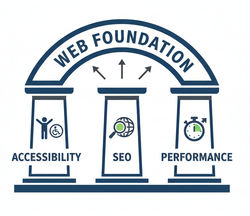
Figure: The three non‑negotiable pillars of a useful audit.
1. Accessibility Audit: The Foundation of Inclusion
This audit focuses on how well your website adheres to standards like the Web Content Accessibility Guidelines (WCAG). It’s about ensuring that people using assistive technologies, such as screen readers, keyboard navigation, or voice controls, can perceive, operate, and understand your content.
What it surfaces:
- Keyboard Traps: Areas where users cannot tab in or out of a component (a critical, frustrating failure).
- Insufficient Color Contrast: Text that is too light against its background, making it unreadable for users with visual impairments.
- Missing or Incorrect Semantics: Misuse of heading structures (
<h1>used after an<h2>on a key page, for example) or elements that lack proper ARIA labels to inform screen readers what they are.
An accessibility audit isn't just a legal necessity (though that's certainly a factor); it’s a design and development issue. An inaccessible site is a broken product for a significant segment of your audience.
2. SEO Audit: Earning Visibility
Search Engine Optimization (SEO) is where technical execution meets marketing results. An SEO audit focuses on how well your site is structured for search engine crawlers (like Googlebot) and whether it's optimized to rank for relevant user queries. It’s the difference between building a fantastic product and placing it on a busy street corner versus hiding it in an unmarked basement.
What it surfaces:
- Crawlability Issues: Misconfigured files, excessive internal redirects, or broken sitemaps that prevent search engines from efficiently indexing your content.
- On-Page Optimization: Subtleties like missing or duplicate meta descriptions and title tags, or unoptimized image filenames.
- Structured Data Errors: Incorrect implementation of Schema markup that costs you rich snippets in the search results.
While an SEO audit is often confused with a full website audit, it is just one component. You can have perfect titles and descriptions, but if your page takes 10 seconds to load, Google, and your users will penalize you.
3. Performance Audit: The Speed Imperative
Performance is the bedrock of modern web development. A performance audit evaluates your site’s speed, efficiency, and resource utilization, often focusing on Google's Core Web Vitals (Loading, Interactivity, and Visual Stability). Speed isn't just a feature; it’s a conversion metric. Faster sites rank better and convert more.
What it surfaces:
- Long Task Execution: Heavy JavaScript bundles that block the main thread, causing First Input Delay (FID) issues.
- Render Blocking Resources: CSS or scripts loaded synchronously in the head of the document that delay the First Contentful Paint (FCP).
- Unoptimized Images: Large, uncompressed images or images delivered in outdated formats, contributing heavily to the Largest Contentful Paint (LCP).
Addressing these issues often requires digging into bundling, caching strategies, and asset delivery networks (CDNs). It’s the most technical of the three, and often yields the most immediate, positive user impact.
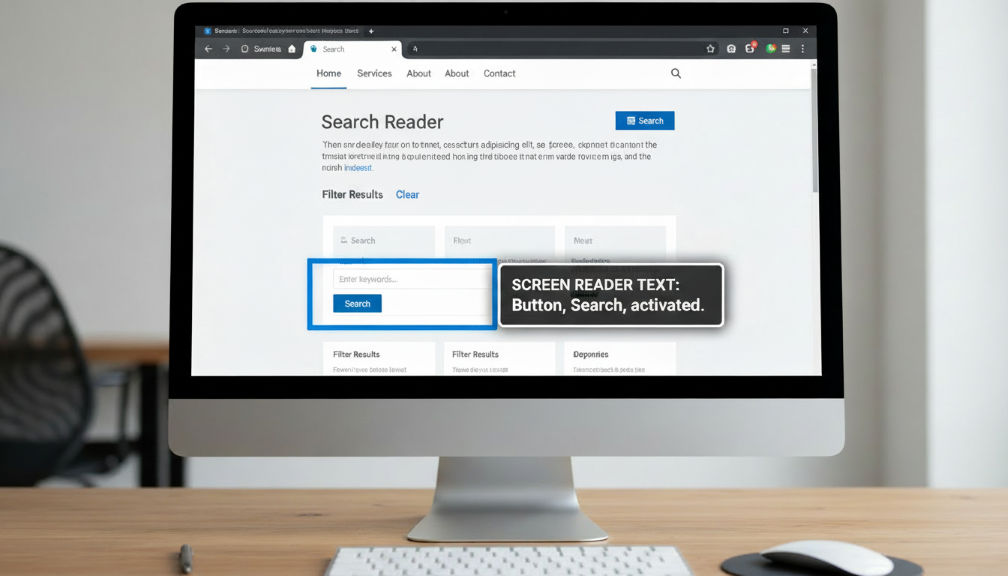
Figure: Examples of keyboard focus and screen-reader annotations.
When to Schedule Your Website’s Check-Up
Unlike a simple code review, a comprehensive website audit isn't necessarily a weekly task. Its purpose is to diagnose complex, evolving issues, so a predictable cadence is key.
- Quarterly Check-in: This is the bare minimum for any active product. Every quarter, your site’s code, traffic patterns, and competitive landscape shift. A quarterly audit ensures small errors don’t compound into major problems.
- Before a Major Redesign/Relaunch: Absolutely critical. Auditing your existing site sets a baseline, identifying what must be fixed and what should be preserved in the new design. Auditing the staging site before launch is your final safety net against introducing new accessibility, SEO, or performance regressions.
- After a Significant Traffic Drop: If your organic traffic or conversions suddenly dip, an immediate SEO and Performance audit is necessary to diagnose potential penalties, crawl budget issues, or unexpected technical failures.
The frequency is less about the clock and more about the complexity of your site and the speed of your deployment pipeline. The faster you ship, the more often you need to check that nothing vital was broken in the process.
Auditbly: Your Intelligent Diagnostic Tool
Manually performing an audit across all three pillars is tedious, time-consuming, and prone to human error, it often involves stitching together data from half a dozen different tools.
At Auditbly, our mission is to provide the expert-level insights you need without the manual labor. Our tool focuses on delivering a holistic and nuanced report that is truly actionable. We don't just point out that your LCP is slow; we pinpoint the exact resource or element responsible for the delay, linking that technical issue back to the core performance concept.
This intelligence lets development teams skip the diagnostic phase and move straight to the fix.
We built Auditbly to be the technical lead sitting beside you quietly highlighting the most efficient path forward. If you're tired of piecing together disparate reports to figure out your next steps in Accessibility, SEO, and Performance, we can help.
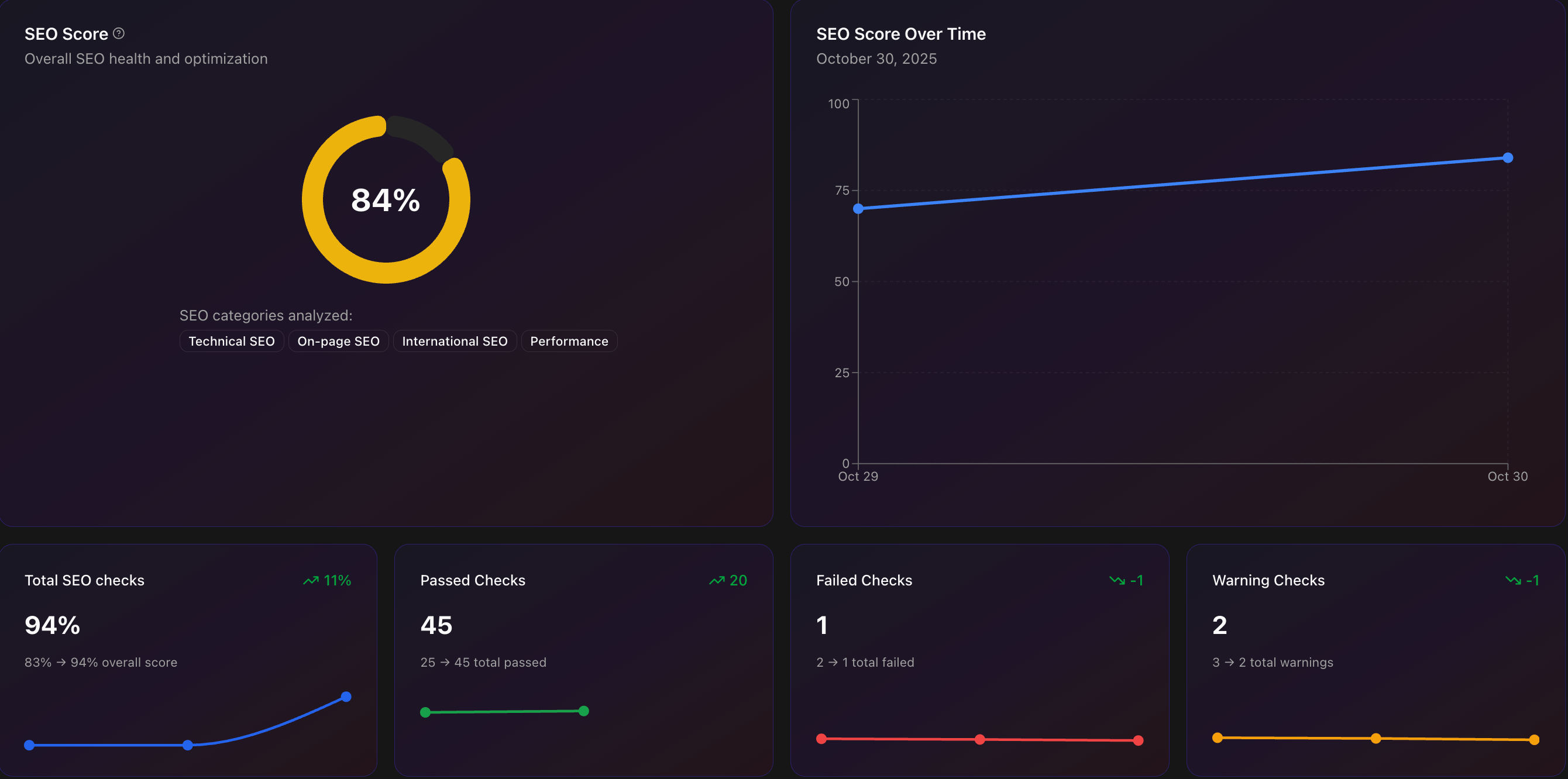
Figure: Auditbly pinpoints the exact resource to fix for fastest wins.